
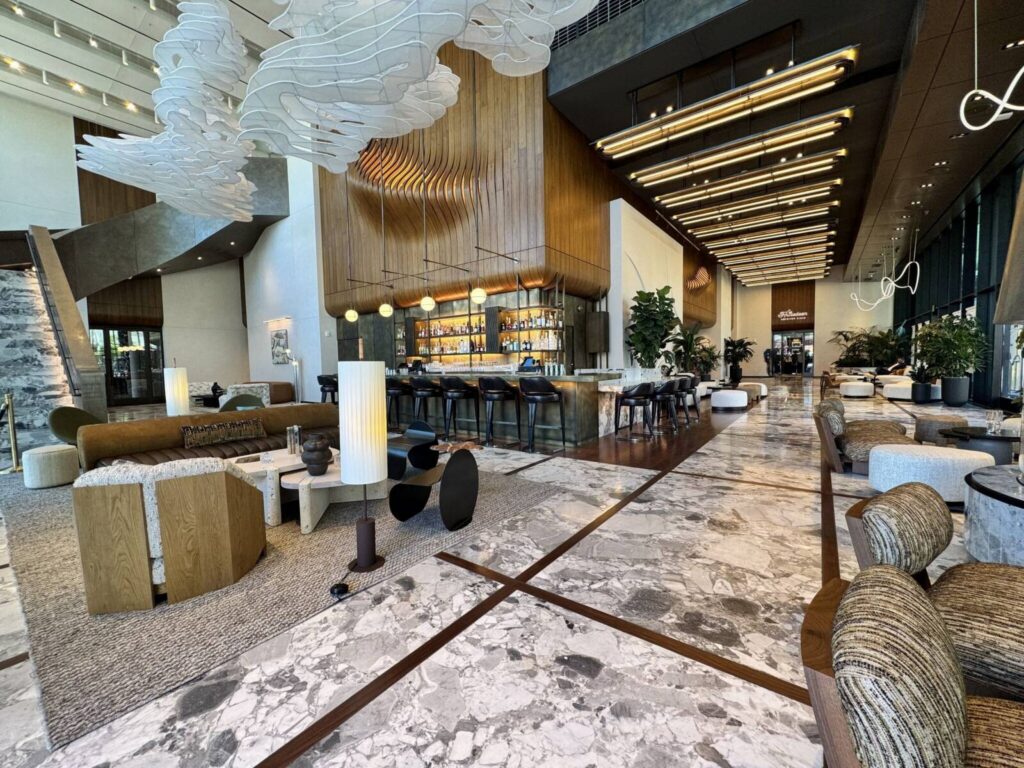
Hotel Lobby Flooring: Making a First Impression That Lasts
The lobby is where guests first experience a hotel’s brand in physical form. Before they reach the front desk, guest room, restaurant, or event space, they have already judged the lighting, finishes, acoustics, cleanliness, and flooring underfoot. That makes hotel lobby flooring more than a design choice. It is a business decision tied to guest perception, property improvement plan requirements, maintenance budgets, safety, and long-term asset value. For hotel owners, asset managers, and operators, the right hotel flooring must look premium on day one and continue performing after years of luggage wheels, rolling carts, spills, foot traffic, and daily cleaning.
For property teams planning broader public-area upgrades, Diverzify’s hospitality flooring solutions can help align design expectations, durability, noise control, and maintenance goals. When the lobby scope also needs schedule discipline, procurement coordination, or phased installation planning, commercial flooring installation support helps keep the work coordinated from selection through turnover.
Why the Lobby Floor Is Your Hotel’s Hardest-Working Surface
The lobby floor carries more operational pressure than almost any other surface in the property. It absorbs arrivals, departures, group check-ins, luggage carts, housekeeping traffic, delivery movement, food and beverage spills, exterior moisture, seasonal debris, high heels, rolling suitcases, and constant cleaning. At the same time, it has to communicate the brand promise immediately. A boutique hotel may need warmth and texture. A full-service convention hotel may need a durable, refined surface that holds up under group traffic. A select-service property may need a cost-conscious solution that still looks current after a brand refresh.
This is the contradiction that makes flooring for hotels so specialized: the lobby floor must feel elevated while functioning like a workhorse. It also needs to support accessibility and safety. ADA guidance on accessible floor and ground surfaces states that accessible floor and ground surfaces must be stable, firm, and slip resistant, which should be factored into product selection, entry zones, transitions, and maintenance planning.
What Hotel Owners Need From Lobby Flooring
Hotel decision-makers rarely select lobby flooring based on appearance alone. A beautiful product that stains, scratches, sounds loud, becomes slippery near entries, or fails before the next renovation cycle can create unnecessary replacement costs and guest complaints. The strongest hotel flooring specifications balance design intent with measurable performance characteristics, including wear resistance, cleanability, acoustics, slip resistance, replacement flexibility, and compatibility with the property’s brand standards.
Key Factors to Evaluate Before Choosing Hotel Lobby Flooring
When comparing hotel lobby flooring materials, owners and operators should look beyond the surface visual. The strongest flooring choice is the one that supports the guest experience, property operations, and brand requirements at the same time.
- Brand alignment: Does the flooring match the hotel’s design standards, guest expectations, and PIP requirements?
- Traffic durability: Can the material withstand luggage wheels, carts, high heels, rolling loads, and constant guest movement?
- Slip resistance: Is the flooring suitable for entries, wet-weather conditions, lobby bars, and other moisture-prone areas?
- Maintenance requirements: Can the hotel’s housekeeping or facilities team realistically maintain the floor long term?
- Repairability: Can damaged areas be replaced or repaired without shutting down the entire lobby?
- Guest disruption: Can installation be phased around check-in, elevator access, and peak occupancy periods?
Flooring Durability, Cleanability, Acoustics, and Safety
Durability should be evaluated by material type, wear layer, abrasion resistance, finish system, expected traffic volume, and the property’s cleaning program. Cleanability matters because hotel lobbies are maintained daily, often with commercial equipment and chemical products. Acoustics should not be overlooked, especially in open-plan lobbies where hard surfaces, high ceilings, and food and beverage activity can increase noise. Slip resistance is also a key specification issue, particularly in entry vestibules, lobby bars, pool-adjacent paths, and wet-weather markets. For tile and other hard-surface materials, ANSI A326.3 dynamic coefficient of friction guidance explains the test method used to measure dynamic coefficient of friction for hard surface flooring materials in the laboratory and in the field.
Flooring Materials for Hotel Lobbies
The best hotel lobby flooring system depends on the property type, brand tier, climate, design direction, and maintenance resources. A luxury urban hotel may justify large-format porcelain or stone-look tile. A high-volume select-service property may benefit from luxury vinyl plank or tile that can be repaired in sections. A boutique property may use rugs, carpet tile, or wood-look materials to create zones within a hard-surface lobby. The goal is not to choose the best material in isolation, but to select the material that fits the space, schedule, budget, brand standard, and maintenance reality.
| Material | Durability Rating | Maintenance Level | Aesthetic Range | Cost Tier | Best Property Type |
| Porcelain or large-format tile | Very high | Moderate | Premium stone, concrete, terrazzo, and custom patterns | $$$ | Full-service, luxury, boutique, and high-traffic public areas |
| Luxury vinyl tile or plank | High | Low to moderate | Wood, stone, abstract, and brand-standard visuals | $$ | Select-service, extended stay, multi-property programs, and phased renovations |
| Polished concrete | High | Low to moderate | Modern, industrial, minimalist, regional design styles | $$ to $$$ | Lifestyle hotels, adaptive reuse properties, and warm or dry climate markets |
| Hardwood or engineered wood | Moderate | Moderate to high | Warm, upscale, residential-inspired | $$$ | Boutique, luxury, lounge zones, and lower-moisture areas |
| Carpet tile or area rugs | Moderate | Moderate | Soft, acoustic, patterned, zoned design | $$ | Seating areas, lounge zones, reception-adjacent spaces, and acoustic control areas |
A material plan should also align the design intent with the right service expertise. Hard-surface lobby concepts may involve tile and stone installation, resilient lobby programs may involve commercial vinyl flooring solutions, and lounge or seating zones may involve commercial carpet solutions.
PIP Compliance and Brand Standard Requirements
For franchised hotels, lobby flooring decisions often happen inside a property improvement plan, brand refresh, conversion, or ownership transition. That means the product must do more than satisfy local design preferences. It may need to align with brand color palettes, finish packages, flooring categories, transition details, documentation requirements, and approved-substitution processes. A product that looks similar to a brand-approved material may still create delays if it lacks the required technical data, warranty language, maintenance documentation, or design review approval.
The smartest approach is to address PIP requirements before procurement. Hotel owners should confirm whether the brand requires a specific manufacturer, visual, installation method, coefficient of friction documentation, attic stock percentage, or maintenance protocol. When substitutions are needed, the flooring contractor should help prepare the technical documentation early, not after the project schedule is already at risk. Owners managing several properties can also evaluate whether Diverzify National Accounts support is relevant for multi-property flooring standards and repeatable execution.
Renovation Timing and Guest Disruption Minimization
Lobby flooring renovations are challenging because the lobby cannot simply disappear from hotel operations. Guests still need check-in, access to elevators, routes to restaurants, luggage movement, and ADA-compliant pathways. A strong hotel flooring installation plan typically uses phasing, temporary transitions, after-hours work, clear wayfinding, dust control, material staging, and daily communication with hotel leadership.
This is where hospitality-specific project management matters. Diverzify’s design and project management services support scope planning, coordination, and schedule alignment, while commercial installation services help execute the work in active hotel environments.
Signs It May Be Time to Replace Hotel Lobby Flooring
A lobby floor does not need to be completely failed before replacement becomes the smarter financial decision. In many hotels, outdated or damaged flooring quietly affects guest perception long before it becomes an urgent facilities issue.
- Visible wear paths near entries, elevators, and front desk queues
- Loose tiles, curling edges, cracked grout, or damaged transitions
- Staining, dullness, or finish damage that cleaning no longer corrects
- Flooring that no longer matches current brand standards
- Recurring guest complaints about appearance, noise, or slipperiness
- Maintenance costs that continue increasing year over year
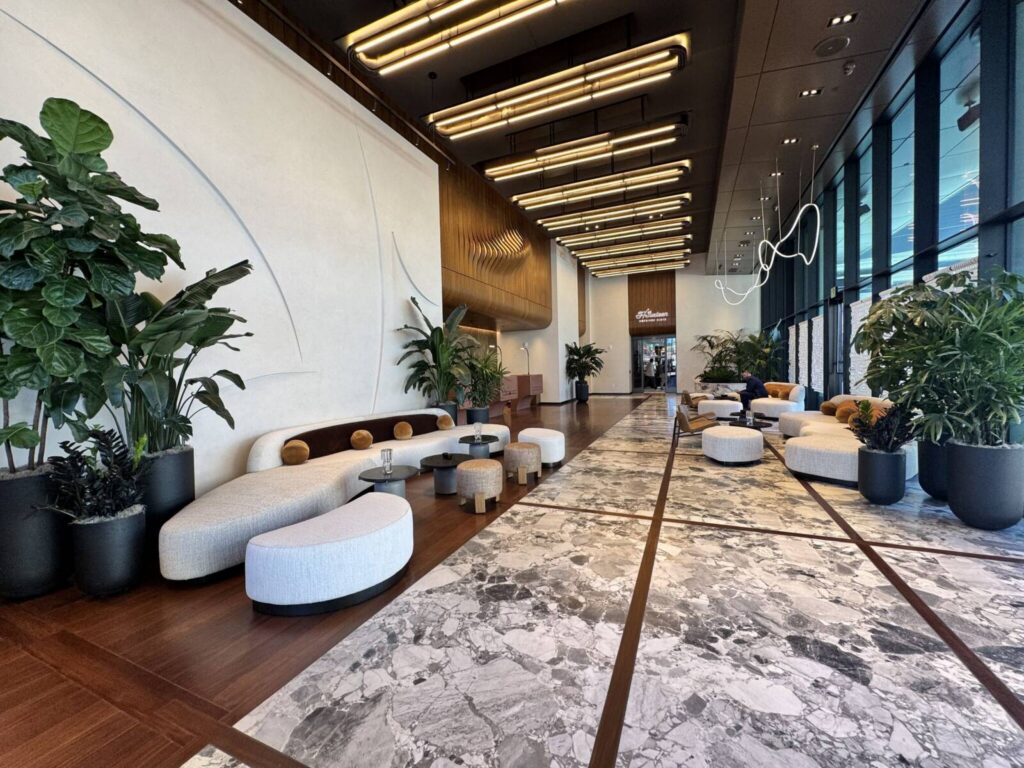
Designing for Longevity: What 10-Year Lobbies Have in Common
Long-lasting lobbies are usually designed as systems, not as isolated finish selections. The exterior entry captures moisture and debris before it reaches the feature flooring. The main walking path uses a material that can tolerate rolling loads and frequent cleaning. Seating zones introduce softness and acoustic comfort without placing fragile materials in the highest-impact areas. Transitions to elevator banks, restaurants, restrooms, meeting spaces, and corridors are planned carefully so edges do not fail before the field material.
Maintenance is equally important. Even premium hospitality flooring can underperform if cleaning products are incompatible with the finish, if walk-off matting is undersized, or if the property does not maintain a repair plan. Owners should ask for manufacturer maintenance instructions, recommended cleaning chemistry, replacement procedures, attic stock guidance, and whether a long-term surface care program should be part of the flooring lifecycle strategy before installation begins.
How to Evaluate a Flooring Contractor for Hospitality Projects
A hotel lobby project requires more than general commercial flooring knowledge. Owners should look for a contractor with hospitality references, occupied-property experience, brand-standard familiarity, installation crews that can work nights or off-peak windows, and the project management discipline to coordinate with general managers, ownership groups, designers, purchasing teams, and brand representatives. The contractor should also be able to document product data, warranty terms, maintenance requirements, and any substitution rationale needed for design review.
The strongest partner will understand the business pressure behind the project. Delays can affect occupancy, guest satisfaction, brand compliance, and revenue. A qualified contractor should be able to explain phasing, daily turnover expectations, site protection, logistics, punch-list procedures, and post-installation support before the project begins.
Next Steps for Hotel Owners and Operators
The right hotel lobby flooring should support the guest experience, satisfy brand requirements, withstand daily traffic, and protect long-term renovation value. Hotel owners planning a PIP, lobby refresh, brand conversion, or multi-property standardization program should begin with a flooring assessment that reviews existing conditions, traffic patterns, entry moisture, subfloor issues, maintenance practices, and brand documentation requirements.
Request a lobby flooring assessment from Diverzify. A secondary lead capture offer could be a downloadable Hotel Flooring PIP Checklist covering brand review, material approvals, phasing, subfloor evaluation, attic stock, cleaning protocols, and guest-disruption planning.
Request a flooring consultation from Diverzify.