
School floors rarely fail because of materials alone — they fail when decisions don’t match real usage, maintenance capacity, and lifecycle demands.
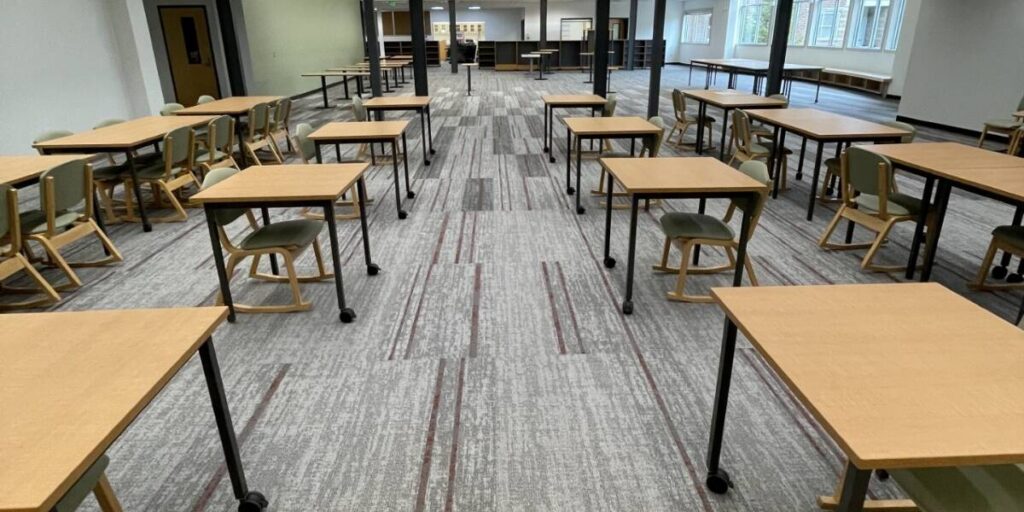
The Problem With First-Cost Thinking in School Flooring
In education environments, flooring is one of the hardest-working elements in the building — yet it’s often one of the most misunderstood.
Daily foot traffic, constant furniture movement, frequent cleaning, and limited downtime place enormous strain on school floors. Still, many flooring decisions are made with one primary factor in mind: first cost. The result is a familiar cycle — materials that look good initially but wear out quickly, require intensive maintenance, or need to be replaced far sooner than expected.
The schools that break this cycle don’t necessarily spend more upfront. They think differently about durability, maintenance, and long-term value.
The Real Reason School Floors Wear Out Too Soon
When flooring underperforms in schools, it’s rarely due to a single flaw. More often, it’s the result of mismatches:
- Materials selected without regard for daily traffic volume
- Finishes that require maintenance beyond custodial capacity
- Products that aren’t designed for rolling loads or frequent cleaning
- Designs that show wear quickly in high-use areas
Over time, these issues compound — driving higher labor costs, more frequent repairs, and disruptive replacements that strain already tight budgets.
Why First-Cost Decisions Fail Over the Flooring Lifecycle
Upfront price is easy to compare. Lifetime cost is harder — but far more accurate.
Lifecycle value considers:
- How long a floor realistically lasts in a school environment
- How often it needs maintenance — and how complex that care is
- Labor, materials, and downtime over years of use
- The cost of disruption to students, staff, and schedules
When viewed through this lens, many lower-cost options lose their advantage quickly. Materials that minimize intervention and extend replacement cycles consistently deliver better value over time.
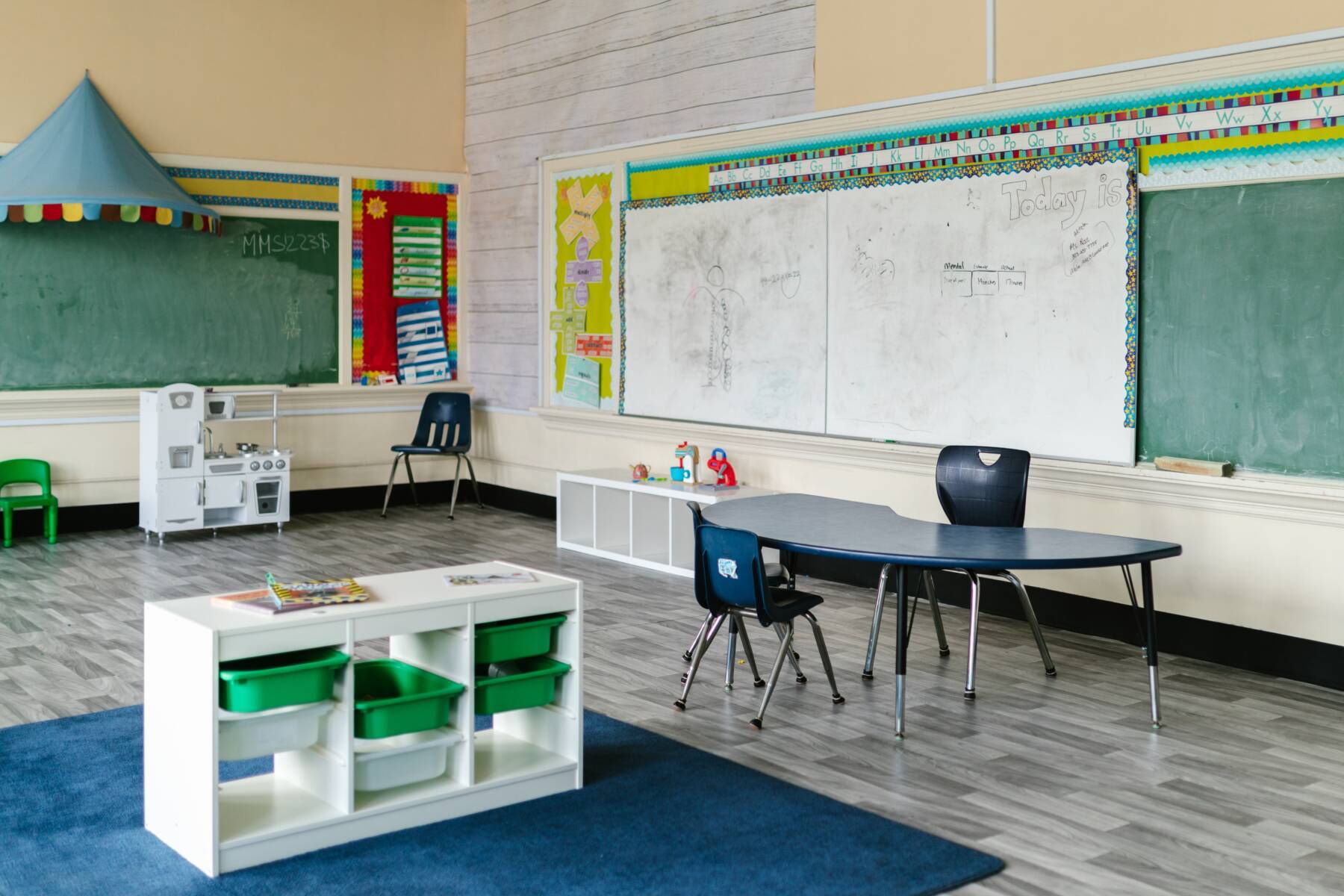
We created the Education Flooring Durability Guide to help schools move beyond first-cost decisions and choose materials that perform under real-world use.
This is where many durability conversations oversimplify the issue.
Durability Isn’t Just About the Product
A common misconception is that durability is determined solely by material type. In reality, performance depends on how flooring systems interact with real-world conditions, including:
- Furniture movement and rolling loads
- Moisture exposure and cleaning protocols
- Acoustics, slip resistance, and comfort underfoot
- The size and capability of custodial teams
Flooring that aligns with available maintenance resources tends to outperform more demanding systems — even if the materials themselves are technically “durable.”
Design Can Support Durability — Not Compete With It
Durable flooring doesn’t require sacrificing aesthetics.
Schools that prioritize lifecycle value often use:
- Modular flooring systems that allow selective replacement
- Color zoning to guide traffic and reduce visible wear
- Textures and finishes that maintain appearance over time
- Consistent materials across similar-use spaces
These strategies extend floor life, reduce waste, and help facilities remain visually welcoming without increasing maintenance burden.
Why Real-World Experience Matters in Material Selection
Product literature often focuses on ideal conditions. Schools operate far from ideal.
What truly differentiates successful flooring decisions is insight gained from years of installation and maintenance in active learning environments. Understanding how materials perform after thousands of students, countless cleanings, and years of use provides clarity that specifications alone can’t offer.
This experience allows education leaders to make informed, product-neutral decisions grounded in actual performance — not just claims.
Rethinking School Flooring for the Long Term
Flooring decisions in schools aren’t cosmetic. They affect safety, maintenance efficiency, budgets, and the daily experience of students and staff.
By shifting the conversation from first cost to lifecycle value, education facilities can:
- Reduce long-term maintenance demands
- Extend replacement cycles
- Minimize disruption
- Protect limited capital budgets
Durability and design don’t have to be tradeoffs — when aligned with lifecycle thinking, they reinforce each other.
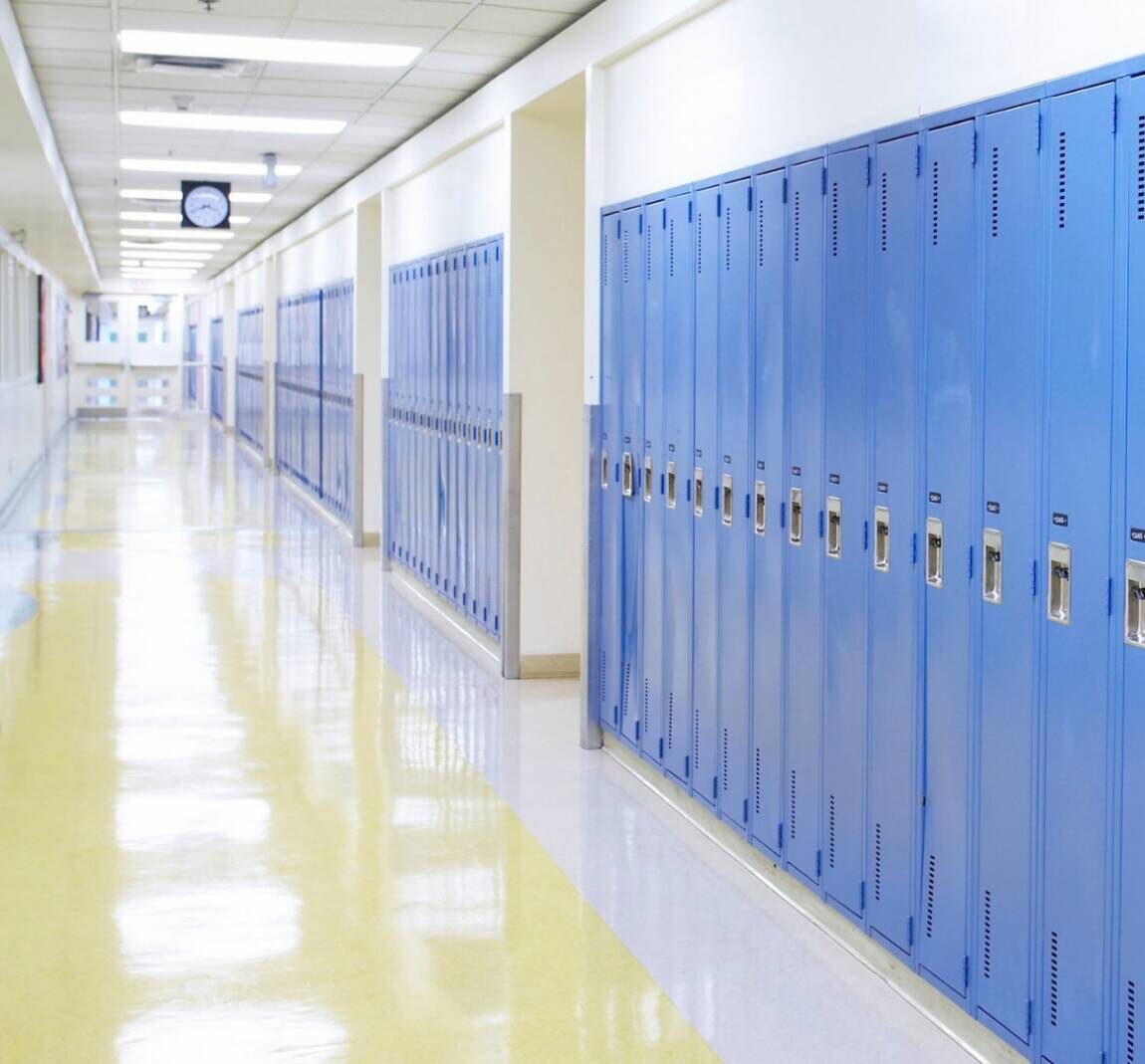
To help schools move beyond first-cost decisions and select flooring that performs in real-world conditions, we created the Education Flooring Durability Guide.