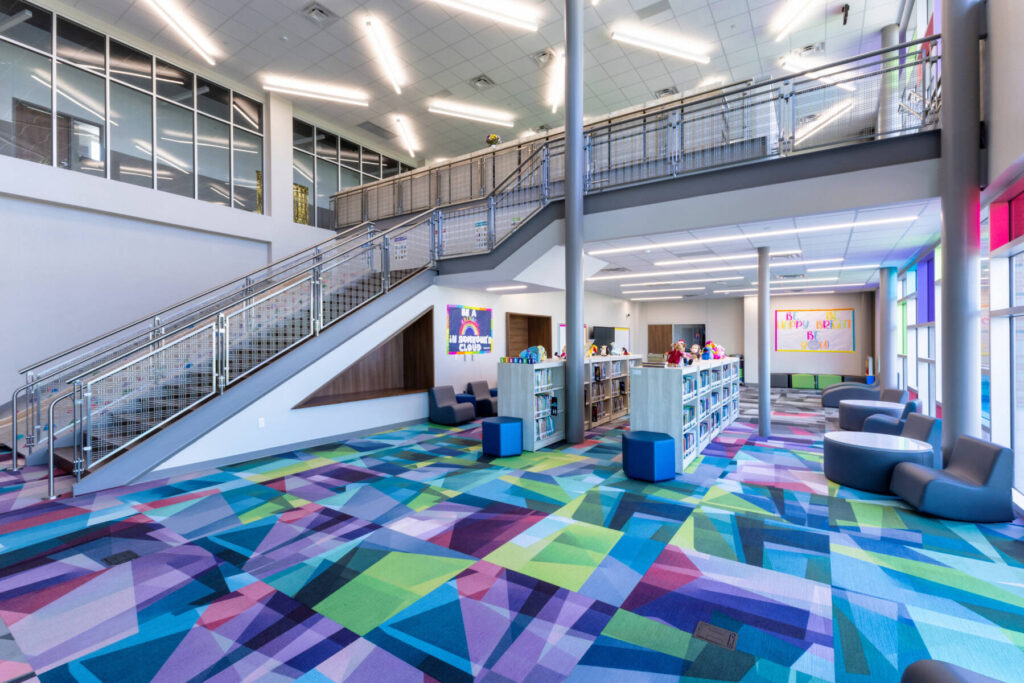
School Flooring Solutions Built for Safety, Durability, and Learning
Every day, millions of students, teachers, and staff members walk the hallways of America’s schools -- from chaotic K–12 corridors to high-traffic university campuses. Behind those daily movements lies an often-overlooked factor in student safety and wellness: the flooring beneath their feet.
Flooring plays a direct role in protecting students from slips and falls, maintaining indoor air quality, and supporting accessible, healthy spaces. The right material choices, along with the right installation and maintenance strategies, can help schools reduce risk, lower operational strain caused by budget cuts and staffing shortages, and create environments that support learning.
At Diverzify, we believe school flooring safety and wellness begin from the ground up.
1. Traction and Safety: Preventing Slips, Trips, and Falls on Commercial Flooring
Slip and fall incidents remain one of the leading causes of injury in school environments. From rain-soaked entrances to high-traffic hallways, flooring surfaces must provide consistent traction under changing conditions.
Slip resistance is measured by a surface’s coefficient of friction (COF). Industry standards, such as those set by the American National Standard A326.3 test method, provide benchmarks for evaluating how flooring performs in both dry and wet conditions. For education environments, maintaining a dynamic COF of 0.42 or higher is recommended to reduce the risk of slips.
Key considerations for school flooring safety:
- Use slip-resistant finishes or coatings in high-traffic zones like entrances, cafeterias, and stairwells.
- Incorporate transition strips that are flush and stable to prevent tripping hazards.
- Evaluate maintenance practices — improper cleaning solutions can leave films that reduce traction.
- Choose matting systems at entryways to capture moisture and debris before it reaches corridors.
2. Clean Air, Clear Minds: Flooring’s Role in Indoor Air Quality (IAQ)
The conversation around school safety now extends beyond physical hazards to include air quality and environmental health. Many flooring systems -- and the adhesives, sealants, and finishes used to install them -- can release volatile organic compounds (VOCs) that affect IAQ and occupant wellbeing.
To safeguard students and staff, schools should prioritize:
- Low-VOC materials and adhesives that meet or exceed GreenGuard Gold or FloorScore certification standards.
- Moisture mitigation solutions to prevent mold growth beneath flooring systems.
- Cleaning and maintenance products with verified low-emission formulas that don’t degrade IAQ over time.
Beyond compliance, cleaner air has measurable effects on attendance and academic performance. Studies have shown that improving IAQ can reduce absenteeism and enhance focus -- outcomes that matter as much to administrators as they do to parents.
3. Operational Efficiency: Reducing Custodial Burden and Cost
Custodial and facilities teams are stretched thinner than ever. In post-pandemic operations, maintaining hygienic, easy-to-clean surfaces is essential, but it shouldn’t overextend staff or budgets.
Flooring selection can directly reduce maintenance strain and deliver measurable cost savings:
- Seamless or low-seam materials (like LVT or sheet vinyl) minimize dirt traps.
- Rubber and linoleum require no waxing or polishing, saving time and labor.
- Modular carpet tiles can be replaced individually, eliminating the need for full-floor replacement.
- Proper floor finishes can enhance soil release and extend cleaning intervals.
When cleaning is easier and faster, facility teams can focus on preventive maintenance instead of reactive repairs -- improving both efficiency and appearance. Diverzify’s APEX Surface Care specialists often help schools design maintenance programs that fit staff capacity and extend product life without compromising health standards.
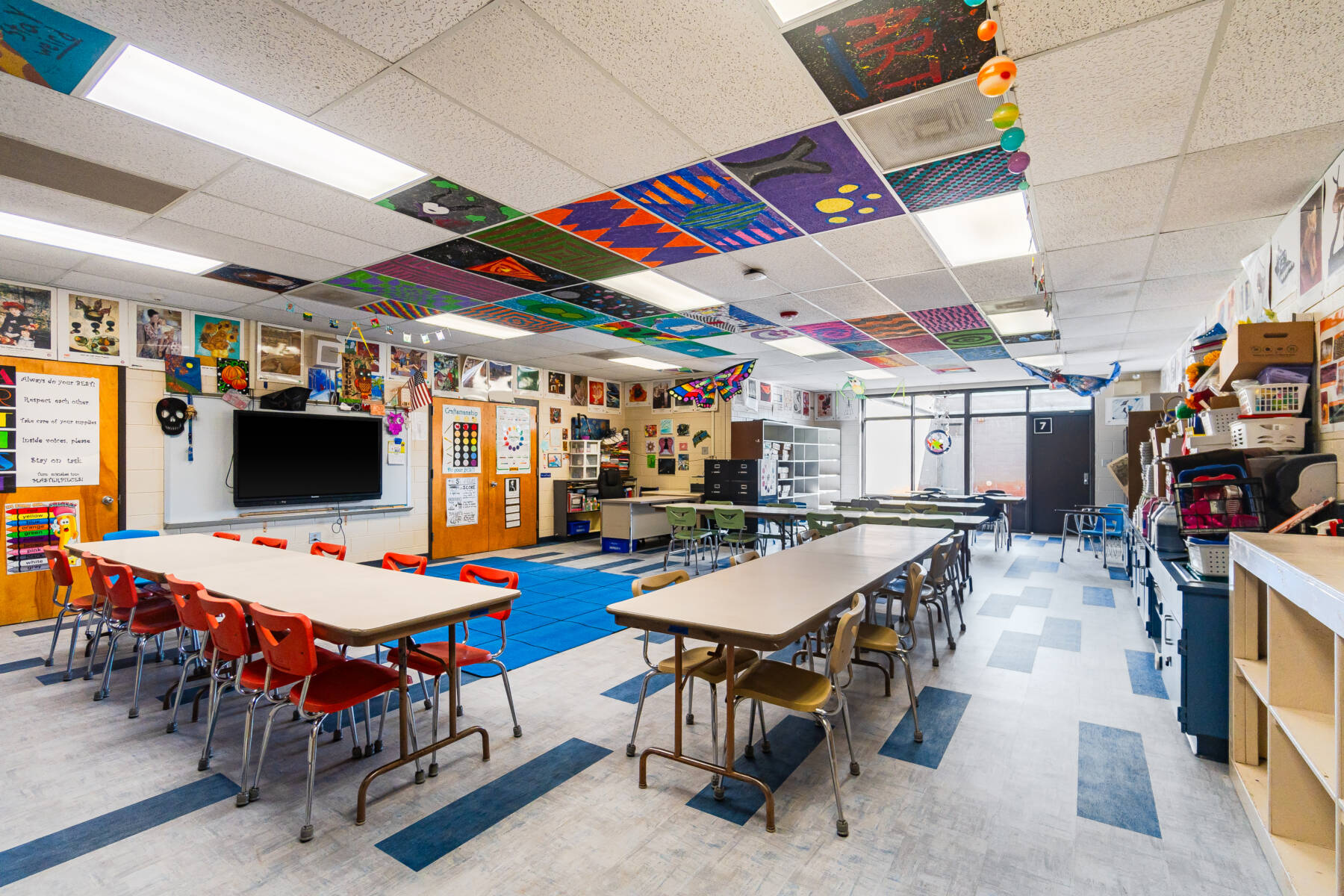
See how Diverzify helps districts create cleaner, more durable spaces across classrooms, corridors, and public learning areas.
4. Accessibility and Compliance: Every Step Matters
School flooring safety isn’t just about preventing accidents -- it’s about ensuring that every student, staff member, and visitor can move through a space comfortably and confidently.
Inconsistent flooring transitions or uneven surfaces can pose accessibility barriers, particularly for students using mobility devices. ADA guidelines specify that flooring transitions should be flush or beveled, stable, and slip-resistant to avoid hazards.
Best practices for compliance:
- Plan transitions early in design -- not after material selection.
- Use contrasting colors or textures to help visually impaired individuals navigate changes in surface.
- Choose materials with consistent height and resilience across zones.
By addressing these details during planning, schools can prevent future rework and ensure every space supports inclusivity and safety.
5. Designing for Wellness: More Than a Surface
Safety and wellness go hand in hand. Flooring can influence everything from acoustics to psychological comfort, affecting how students learn and staff perform.
- Acoustic comfort: Rubber, cork, and carpet tile reduce noise and echo, improving concentration and lowering stress levels.
- Visual warmth: Natural tones and biophilic patterns create calming environments that promote wellbeing.
- Thermal comfort: Resilient surfaces provide underfoot warmth that contributes to occupant comfort during long school days.
Designing with wellness in mind means creating spaces that feel safe, sound calm, and function efficiently -- an approach Diverzify brings to every education project.
6. Partnering for Long-Term Protection
School flooring safety and wellness don’t end at installation. They’re sustained through consistent care, proper product use, and accountability across the flooring lifecycle.
With over 65 locations nationwide and more than 7,500 certified installers and technicians, Diverzify’s education teams bring unmatched depth in both material expertise and maintenance strategy. Whether selecting slip-resistant finishes, specifying low-emission adhesives, or designing preventative care programs, Diverzify helps schools protect their most important asset -- their people.
Safe by Design — Because Every Step Counts
Creating safe, healthy, and inspiring learning environments starts from the ground up. The right school flooring system improves air quality, prevents accidents, supports accessibility, and simplifies maintenance, giving schools peace of mind for years to come.
Diverzify partners with educational institutions nationwide to design and maintain flooring solutions that are safe by design and sustained for life.